Dry Shampoo: How to Use It Properly and Which Formula Is Right for Your Hair
Most people apply dry shampoo wrong - not a little wrong, but fundamentally wrong - and then wonder why their hair looks worse by the end of the day. The product itself is not the problem. Done right, a good dry shampoo can genuinely extend the time between washes without leaving your hair feeling like it has been coated in powder. Done wrong, it just sits on your scalp, makes buildup worse, and eventually clogs follicles.
This guide covers the right way to use it, which formulas work for which hair types, and why the way you apply it matters as much as which product you choose.
What Dry Shampoo Actually Does
Dry shampoo does not clean your hair the way water and shampoo do. What it does is absorb excess oil from your scalp and hair shaft using absorbent ingredients - most commonly starch, silica, or clay - so your hair looks and feels fresher between washes.
Most aerosol formulas also contain alcohol, which helps the product dry quickly and contributes to that immediate freshening effect. Some newer formulas, like the K18 Airwash, take a completely different approach - instead of starch, they use translucent porous microbeads that absorb oil without leaving white residue, combined with biotech ingredients that actively neutralise odour rather than masking it. That distinction matters more than it might sound: no white cast means the formula works on dark hair without showing, and genuine odour elimination means it keeps working for up to three days rather than just delivering an immediate fresh hit that fades within hours.
Understanding what it does (absorb and refresh) versus what it does not do (remove product buildup, deeply cleanse the scalp) matters because it changes how you should use it and, importantly, how often.
The Right Way to Apply Dry Shampoo
This is where most people go wrong. The most common mistake is applying dry shampoo to hair that is already visibly oily, spraying it directly onto the scalp, and then immediately brushing it through. That approach tends to deposit a white cast and move oil around rather than absorbing it.
The correct method takes about thirty seconds more but makes a real difference.
Apply to dry hair before it looks oily. Dry shampoo works best as a preventative measure rather than a rescue treatment. If you apply it in the morning before your hair has had a chance to produce much oil, it absorbs the oil as it arrives rather than trying to reverse it. Many hairstylists apply it at night before bed, which gives the product hours to work while you sleep, so hair looks genuinely clean in the morning.
Hold the can at least 15 to 20 centimetres from your scalp. Spraying too close concentrates the product in one spot and creates the white, powdery patches that are hard to work out. At a distance, the formula disperses evenly.
Spray in sections, focusing at the roots. Part your hair and work section by section so you get even coverage rather than piling everything on top.
Wait before you touch it. Give the formula at least 60 seconds to absorb into your hair and scalp before you do anything with it. Rushing this step is what causes the powder-y finish.
Massage it in, then brush through. Use your fingertips to work the product into the scalp using circular motions, the same way you would when shampooing. This distributes the formula, helps it absorb, and lifts the roots. Follow with a brush or wide-tooth comb to remove any visible residue.
How Often Is Too Often?
Dry shampoo is a between-wash product, not a replacement for washing. Used every day, it builds up on the scalp - and that buildup can irritate the scalp, clog hair follicles, and over time contribute to breakage at the roots.
The general guidance from most hair professionals is to use dry shampoo no more than two or three times between proper washes, and to make sure that when you do wash, you are properly removing any buildup from the scalp. If you find yourself reaching for dry shampoo daily, it is worth looking at whether your shampoo routine needs adjusting - sometimes people are over-washing, which triggers the scalp to produce more oil to compensate, creating the exact problem dry shampoo is being used to solve.
When you do wash after extended dry shampoo use, a clarifying shampoo is the most effective way to clear product buildup from the scalp and start fresh. [See our clarifying shampoo guide for more on how and when to use one.]
Which Dry Shampoo Is Right for Your Hair?
Dry shampoos are not all the same formula for all hair types. The weight of the formula, the finish it leaves, and the ingredients used vary quite a bit between products - and for hair that is dry, curly, or low-porosity, those differences matter more than they do for straight, oily hair. Here is how to match the right one to your hair.
For oily hair that needs serious oil control - K18 Airwash Dry Shampoo 118ml
Most dry shampoos absorb oil at the moment of application and not much after that. K18 Airwash is built differently. It uses translucent porous microbeads rather than starch, which means it absorbs oil without leaving a white cast or powdery residue - making it one of the few formulas that genuinely works on dark hair without showing. The odour control comes from K18's odorBIND technology, a smart-release biotech system that recognises and eliminates odour-causing molecules rather than covering them up, and it keeps working for up to three days after a single application. There is also a biotech-derived Mediterranean microalgae ingredient that helps balance the scalp and moderate excess oil production over time, rather than just addressing the surface symptom.
This is suitable for all hair types, but it is best suited to anyone whose scalp produces a lot of oil and who wants a formula that does not need to be reapplied daily. If you are trying to genuinely stretch washes rather than just delay the inevitable, this is the most technically advanced formula in the range.
For oily hair that wants a luxury finish - Kerastase Fresh Affair Dry Shampoo 150g
Kerastase is one of the most respected salon brands in Australia, and Fresh Affair is their dry shampoo designed specifically for instant sebum absorption. It works across all hair types and leaves a clean, fine finish rather than the heavier residue you can get from some aerosol formulas. It is a good option if you want reliable, daily-level performance in a lightweight formula - particularly if you use other Kerastase products and want your haircare to work together consistently.
For oily hair on a budget - O&M Dry Queen Dry Shampoo 300ml
O&M (Original and Mineral) is an Australian professional brand with a strong following among people who want salon-quality products without unnecessary chemicals. Dry Queen is their answer to oil absorption, and the 300ml size means you get significantly more product than most competitors at a similar price point. It is formulated for oily hair and cleanses by absorbing excess oil and impurities from the scalp. If you go through dry shampoo quickly or have multiple people in the household using it, this is a practical choice.
For hair that needs freshening without much texture - Muk Head Muk Dry Shampoo 150g
Muk is an Australian brand with a strong salon heritage, and Head Muk Dry Shampoo is a straightforward, effective formula that absorbs oil and refreshes hair without adding a lot of texture or volume. This makes it a good fit if your hair is medium to thick and you find volume-boosting dry shampoos make it feel puffed up or unmanageable. It suits oily hair and all hair types, so it also works well if you have a combination scalp where some areas are oilier than others.
For active lifestyles and post-workout hair - IGK First Class Dry Shampoo 288ml
Most dry shampoos focus on oil absorption and leave it at that. IGK First Class adds two things most do not: genuine volume at the roots and style extension. In brand testing, 8 in 10 people agreed it extended their style by up to seven days, and the same proportion reported their hair still had volume and texture after that window - which is a meaningful claim given how flat dry shampoo-extended hair can start to feel by day three or four. It also detoxes the scalp and eliminates odour, including after workouts, making it a solid pick if you exercise regularly and need a formula that can handle sweat as well as natural oil production. The 288ml size makes it one of the larger formats in the range, which is useful if you use dry shampoo frequently. It is best suited to oily hair types.
For dry hair - Klorane Dry Shampoo with Oat and Ceramide 150ml
Most dry shampoos are designed with oily hair in mind, which means their formulas can feel too stripping for hair that is already dry. Klorane's Oat and Ceramide version is different - it is built around oat milk and ceramides, which help maintain the hair's natural moisture balance while absorbing oil at the scalp. In practice, that means you get a refreshed feel at the roots without the rest of the hair feeling more brittle or stripped than before you started. It is a gentler option all round, and a good choice if your scalp gets oily between washes but your mid-lengths and ends are dry.
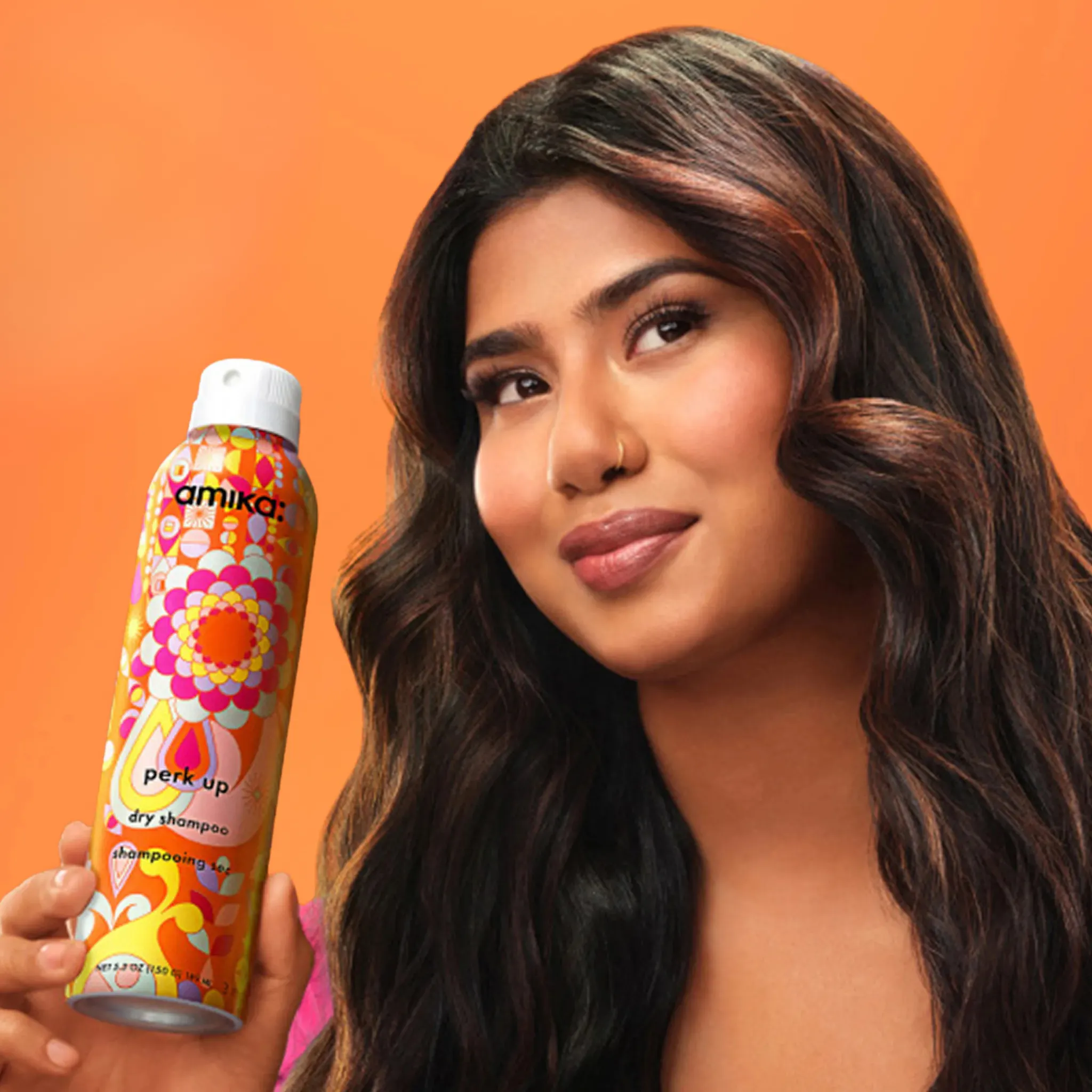
For curly and wavy hair - Amika Perk Up Plus Extended Clean Dry Shampoo 199ml
Curly and wavy hair tends to be drier along the lengths than straight hair, because the natural oils from the scalp take longer to travel down the curl. That means curly-haired people often need dry shampoo less frequently than straight-haired people - but when they do need it, they need a formula that will not leave a heavy or starchy residue that disrupts curl pattern or causes frizz. Amika Perk Up Plus leaves no white residue, is formulated with sea buckthorn - a nutrient-rich ingredient that supports hair health rather than just sitting on top of it - and is explicitly designed for all textures including curly and coily hair. The extended-clean formula also means a lighter touch goes further, which suits curly hair well.
For low-porosity hair - Klorane Aquatic Mint Dry Shampoo 150ml
Low-porosity hair - where the hair cuticle sits tightly closed - is particularly prone to product buildup because ingredients tend to sit on the surface rather than absorbing in. That makes formula choice genuinely important: heavy, starchy dry shampoos are much more likely to build up on low-porosity hair and cause the scalp congestion and dullness that can come from overuse. Klorane Aquatic Mint is a lightweight formula using natural absorbent micro-powders rather than heavy starches, and it delivers an invisible finish. It is free-rinsing enough that it does not compound on low-porosity strands, and the refreshing mint-and-microalgae formula suits frequent use. It works for all hair types, but low-porosity hair in particular benefits from how cleanly it sits on the hair.
A Note on Dry Shampoo and Scalp Health
One of the most overlooked aspects of dry shampoo use is the impact on scalp health over time. Because it is such a convenient product, it is easy to reach for it more often than you should - but the scalp benefits significantly from being properly cleansed on a regular cycle.
If you notice increased scalp sensitivity, flaking that looks different from dandruff, or hair that breaks more easily at the roots, it is worth reviewing how often you are using dry shampoo and whether you are removing buildup thoroughly when you do wash. A good clarifying wash every few weeks makes a noticeable difference in how well the scalp functions and how clean your hair feels at the start of each wash cycle.
Common Questions
Can I use dry shampoo on colour-treated hair? Yes, but with some care. Most of the formulas listed above are suitable for colour-treated hair, but you should check the product page for your specific formula to confirm. The more relevant consideration with colour-treated hair is not the dry shampoo itself but the clarifying step - because clarifying shampoos can fade colour if used too frequently or left on too long. Dry shampoo that lets you extend time between washes can actually help preserve colour by reducing how often you need to shampoo.
Why does my dry shampoo leave a white cast? Almost always because it is being applied too close to the scalp or not being worked in properly. Hold the can further away, spray in smaller amounts across more sections, wait a full minute before massaging in, and use your fingertips to really work it through the roots. If you have very dark hair, you can also spray the product into your hands and distribute it that way for more control. Some formulas are also less prone to white residue by design - K18 Airwash uses translucent microbeads rather than starch specifically to avoid this - so if it is a consistent issue with your current product, switching formula is often the simplest fix.
How do I know when my scalp needs a proper wash rather than more dry shampoo? If your scalp itches, your hair feels heavy or coated even after applying dry shampoo, or you can feel buildup when you run your fingers along your roots, those are signals that it is time to wash properly. Dry shampoo is a tool to extend time between washes, but it does have a limit - and pushing past it starts to work against you.
categories
featured products