Blue Shampoo vs Purple Shampoo: What the Difference Is and Which One You Actually Need
If you've bought purple shampoo to deal with the orange creeping into your brunette balayage and it hasn't done much, you've bought the wrong colour corrector. Purple shampoo is built to cancel yellow, not orange, so it does very little for brown or dark blonde hair fighting brassy warmth. Blue shampoo is the one that actually targets orange, and once you know that, choosing the right bottle gets a lot easier.
Why Blue and Purple Shampoo Aren't Interchangeable
Both work the same way: they deposit a pigment that cancels out the opposite colour on the colour wheel. Purple (or violet) sits opposite yellow, so purple shampoo is designed to neutralise the yellow tones that show up in lightened or grey blonde hair. Blue sits opposite orange, so blue shampoo is designed to neutralise the orange and copper tones that show up in brunette, brown, and dark blonde hair once it's been lightened.
This is the bit most people never get told at the till: which shampoo works isn't really about how light or dark your hair is. It's about which warm tone is actually showing up once the cool tone has faded. Grab the wrong one and you'll be massaging in pigment that has nothing to neutralise, wondering why it isn't working.
How to Tell Which Tone You're Actually Dealing With
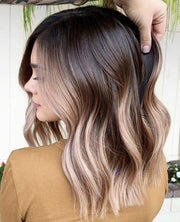
If your hair is brunette, brown, chestnut, or dark blonde, and you've had it highlighted, balayage'd, or otherwise lightened, the brassiness that turns up between salon visits usually reads as orange or copper rather than yellow. That's because there's more red and orange pigment sitting underneath the surface of brunette hair than there is underneath naturally blonde hair, so it's what shows through first as the colour fades. Blue shampoo is the one that will actually make a visible difference here.
If your hair is blonde, light blonde, or grey and silver, the fade you're seeing is far more likely to be yellow, which is exactly what purple shampoo is built for. If that sounds like you, our purple shampoo guide covers how to pick and use one properly.
The easiest way to check: look at your hair in natural daylight, not under warm bathroom lighting. Orange and copper brassiness looks warm and a bit like a copper penny. Yellow brassiness looks straw-like and dull rather than warm. If you're still not sure, a colourist can tell you in about ten seconds.
Who Actually Needs Blue Shampoo
Blue shampoo earns its place in a routine for brunettes, brown-haired, and dark blonde clients who colour or lighten their hair through foils, balayage, or ombre and notice warmth creeping back in before their next appointment. It's a maintenance tool that extends the life of a salon colour service, not a fix for hair that's never been lightened. If your hair is its natural, un-coloured brunette shade, there's nothing for blue shampoo to correct, and you don't need it.
It's also worth saying who blue shampoo isn't for. If you've never lightened your hair, there's no underlying orange or copper pigment for it to neutralise, so it won't do anything noticeable beyond what a regular shampoo would. And if your brassiness is genuinely yellow rather than orange, no amount of blue shampoo will touch it, no matter how often you use it. Matching the product to the actual tone in your hair matters more than picking whichever bottle looks like it's aimed at "brunettes" on the label.
The Right Blue Shampoo for Your Hair and Your Level of Brass
Not every blue shampoo is doing the same job, so it's worth matching the product to how warm your hair is actually running and how it's been coloured.
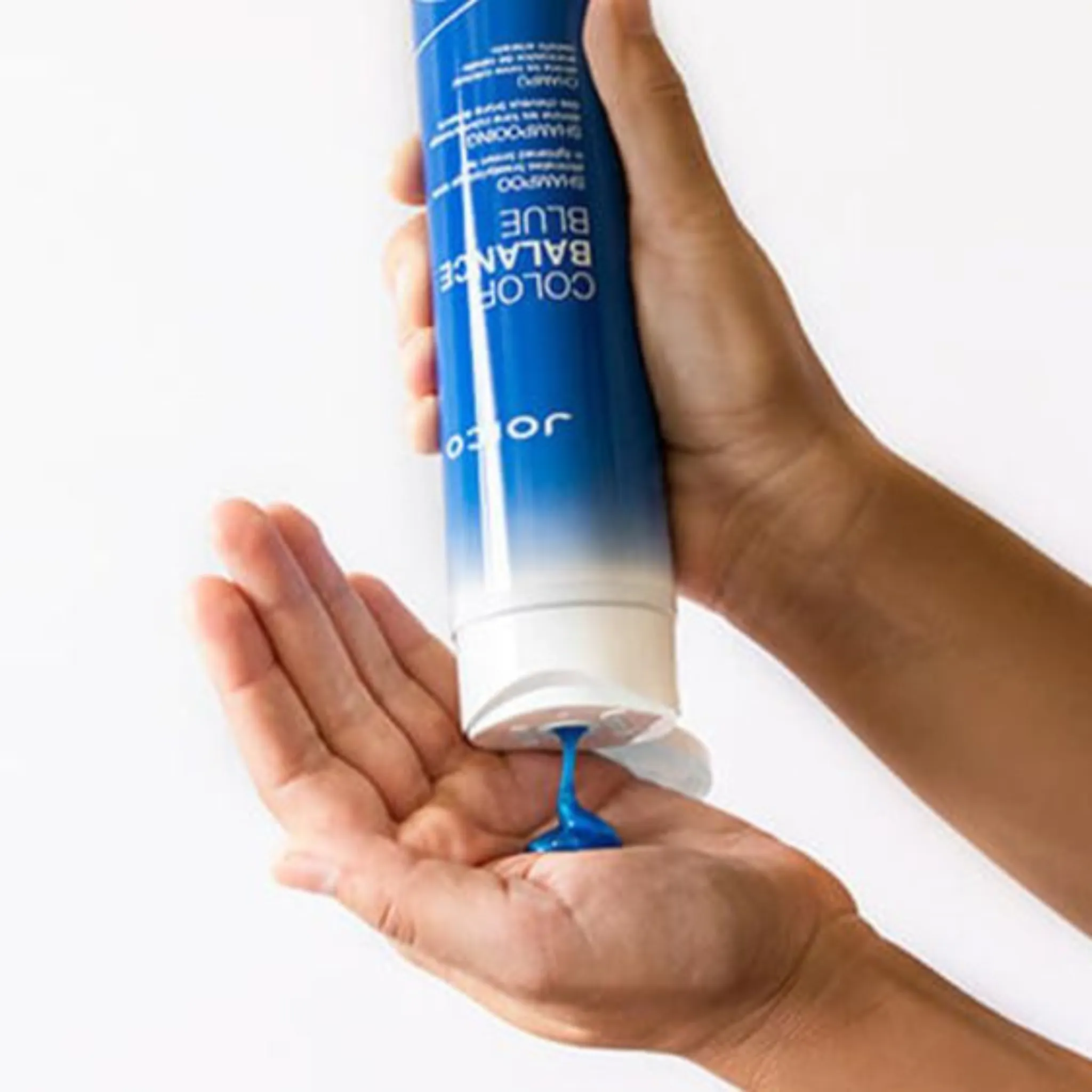
For everyday colour maintenance on naturally dark brunette hair that's been chemically lightened, Joico Color Balance Blue Shampoo 300ml is built to sit in your normal wash routine rather than act as an occasional treatment. It's a true-blue formula aimed at the overly warm, orange tones that tend to show up in graduated dark hair once it's been chemically lightened, and it's designed to bond to the hair fibre so your colour holds for longer between salon visits. Massage it into wet hair, leave it for three to five minutes, and use it two or three times a week, alternating with your regular shampoo rather than washing with it every day.
For brunettes who've lightened their hair and want a proper toning system rather than a single bottle, Matrix Total Results Brass Off Shampoo 300ml is a salon clarifying shampoo that deposits blue-violet pigment to reduce brassy, orange undertones. It's suitable for both colour-treated and natural hair, and you can leave it on for two to three minutes when you want extra toning rather than just a quick cleanse. It's designed to be used alongside the rest of the Brass Off range, so it suits anyone who wants a complete routine rather than a one-off fix.
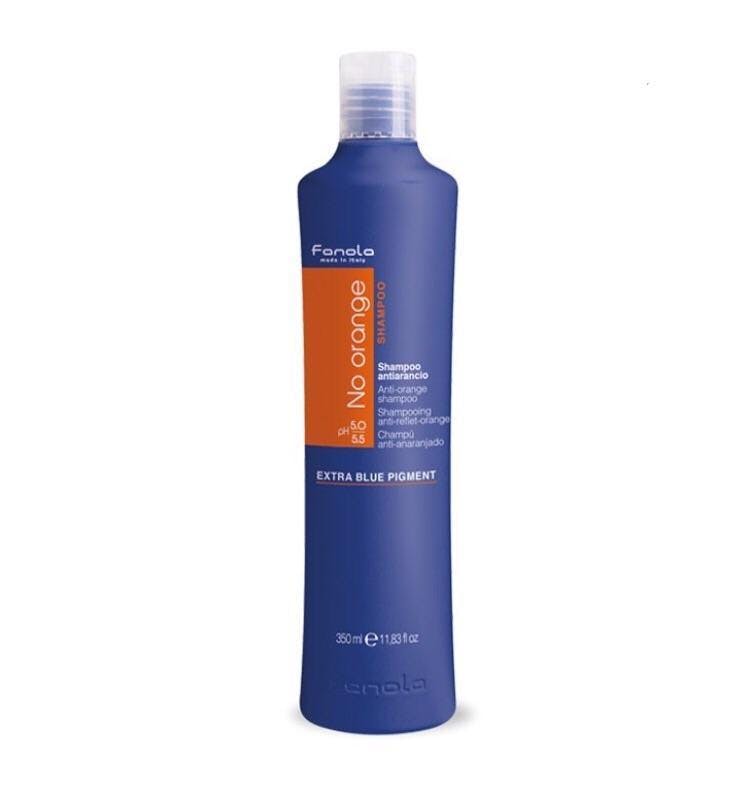
For stronger orange or copper tones, particularly in colour-treated hair that's heading toward a fresh toner service, Fanola No Orange Shampoo 350ml is the more intensive option. It's formulated to neutralise copper and red reflections in colour-treated hair with orange tinges or dark shades, and it's commonly used as a pre-toner step in the basin before a toner is applied, leaving hair shinier and more hydrated in the process. Because it works harder than a maintenance shampoo, wear gloves to avoid staining your fingers, leave it on for one to five minutes, and be careful using it on bleached or heavily lightened hair, since it can over-tone. It won't stain your scalp, so don't let that put you off trying it.
How to Use Blue Shampoo Without Overdoing It
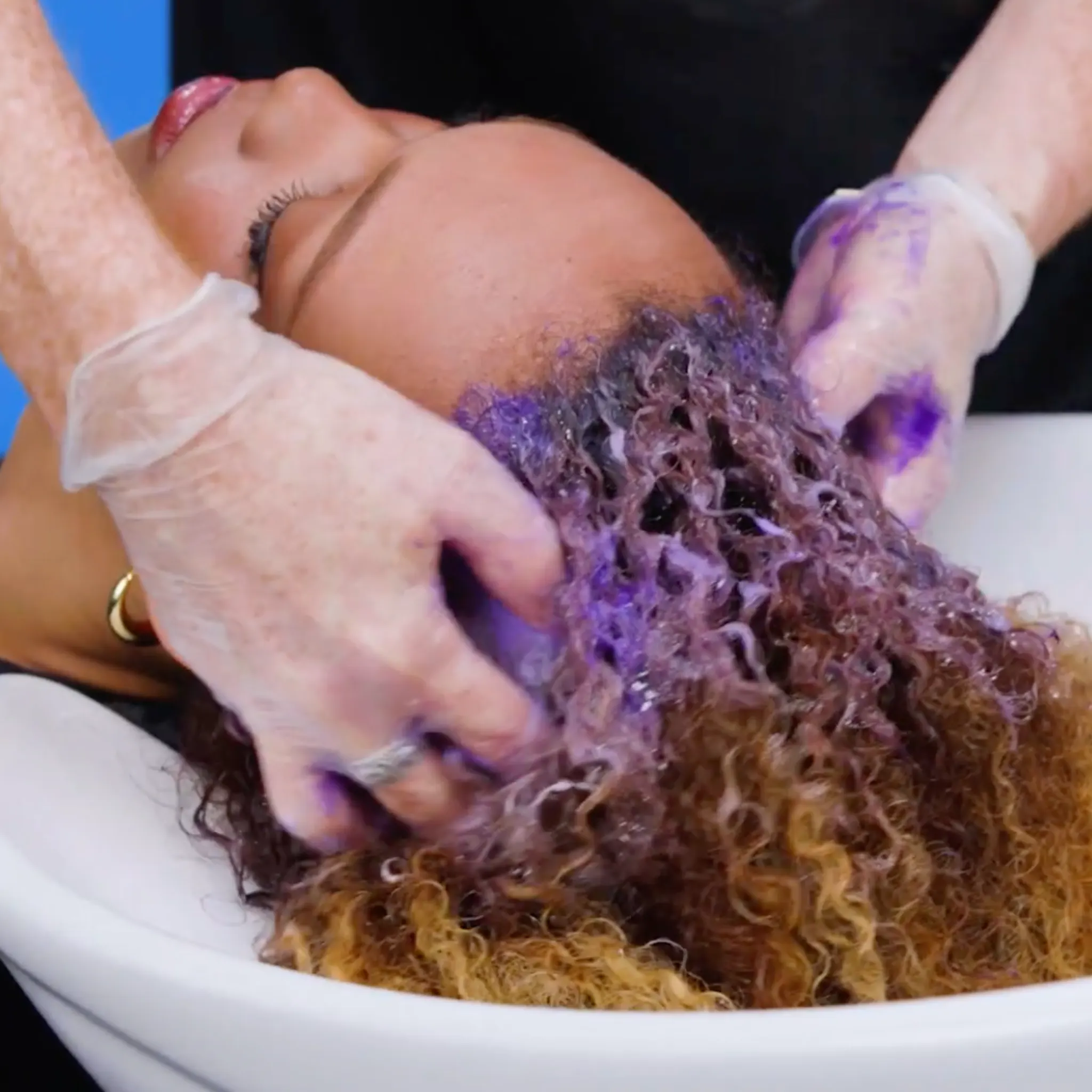
Blue shampoo is a toner, not a treatment, which means it's not meant to replace your everyday shampoo altogether. Using it every single wash can tip your colour too cool, leaving brunette hair looking flat, ashy, or slightly grey rather than rich and warm. Two to three times a week, alternated with your usual shampoo, is the range that keeps brassiness under control without overcorrecting. If your hair runs warmer than most, lean toward the longer end of the leave-in time on the bottle. If it's a lighter, more occasional brass, a quick wash is usually enough. Pay attention to how your colour looks after each wash for the first couple of weeks and adjust from there.
Common Questions About Blue Shampoo
Can I use blue shampoo on blonde hair?
Not if you're trying to fix brassiness. Blue shampoo cancels orange, and blonde hair that's gone brassy is almost always dealing with yellow, which blue pigment won't touch. Purple shampoo is the correct tool for blonde hair, so it's worth switching before you conclude the product doesn't work.
How often should I use blue shampoo?
Two or three times a week is the general starting point, alternating with your normal shampoo. Using it daily risks overcorrecting and leaving brunette hair looking dull or ashy rather than rich.
Will blue shampoo turn my hair blue?
Used as directed, no. The pigment is designed to neutralise existing warmth rather than add a visible tint. That said, leaving a stronger formula on for too long, or using it on hair that's very light or heavily lightened, can shift the tone further than intended, which is why products like Fanola No Orange come with a caution around bleached hair and shorter leave-in times.
categories
featured products