The Best Shampoo for Oily Hair: What Causes It and How to Actually Fix It
You wash your hair in the morning and by afternoon it already looks flat and greasy. If that sounds familiar, the problem might not be your hair type at all. It might be your shampoo, and switching to the right one can genuinely change how long your hair stays clean between washes.
Why Your Scalp Produces So Much Oil
Your scalp produces an oily substance called sebum through sebaceous glands at the base of each hair follicle. Sebum is not the enemy. A healthy amount keeps your scalp moisturised and your hair looking glossy. The issue is when those glands go into overdrive, producing more oil than your hair can handle before your next wash.
Hormonal changes are one of the most common triggers, particularly during puberty, pregnancy, and periods of high stress. Genetics also play a significant role, with some people simply having more active sebaceous glands than others. Humidity, diet, and general scalp health can all influence sebum production too. The point is that oily hair is rarely something you caused by washing incorrectly, but it can absolutely be made worse by using the wrong products.
How the Wrong Shampoo Makes Oily Hair Worse
Here is where it gets counterintuitive. Many people with oily hair reach for the harshest, most stripping shampoo they can find, wash every single day, and scrub aggressively to remove every trace of oil. That approach often backfires.
When you strip the scalp of its natural oils too aggressively and too frequently, your sebaceous glands read this as a signal that the scalp is dry. In response, they ramp up sebum production to compensate. You end up washing more, stripping more, and triggering even more oil. It is a cycle, and the shampoo you are using could be the thing keeping you stuck in it.
The fix is not to stop washing your hair. It is to use a formula that cleanses effectively without over-stripping, so your scalp does not feel the need to go into overdrive.
What to Look for in a Shampoo for Oily Hair
A good shampoo for oily hair needs to do three things well: cleanse the scalp thoroughly, regulate sebum production over time, and leave the hair itself in reasonable condition rather than dry and brittle.
Alpha hydroxy acids, or AHAs, are one of the more effective ingredients for this. They gently exfoliate the scalp to remove buildup and excess sebum, which tackles the source of the oiliness without the kind of aggressive stripping that makes the problem worse. Carbonic acid works in a similar way, helping to absorb excess sebum at the scalp surface. Low-lather or “low shampoo” formulas are another option worth considering. They cleanse without the intense foam that tends to over-dry the scalp, making them a good fit for people who find that strong shampoos leave their scalp feeling tight or irritated after washing.
It is also worth being mindful of where you apply conditioner. Heavy conditioning agents applied directly to the scalp can weigh roots down and contribute to the greasy look, so keeping conditioner from the mid-lengths downward is a simple change that makes a noticeable difference.
If your hair follows the very common pattern of being oily at the roots but dry or damaged at the ends, you need a different approach to a straightforward clarifying shampoo. A formula designed for oily scalp that also protects the lengths will serve you far better than one that tackles the roots at the expense of the rest of your hair.
The Best Shampoos for Oily Hair
These five options cover different versions of the oily hair problem. Each one is available at Oz Hair and Beauty and is matched below to the scenario it suits best.
For oily hair that also looks flat and lacks volume
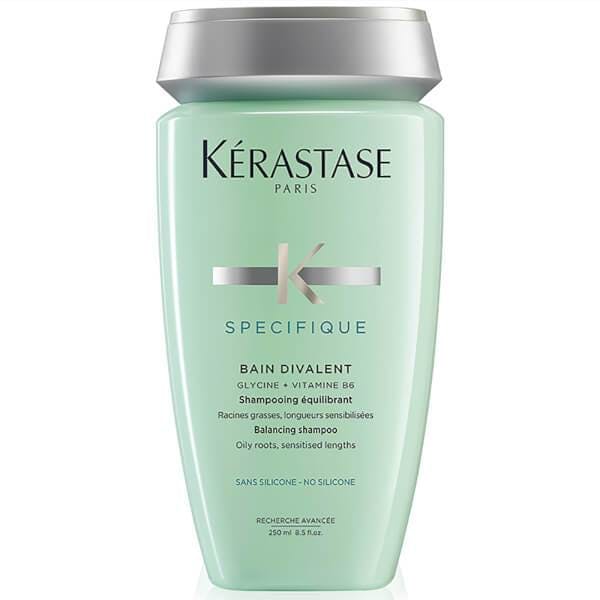
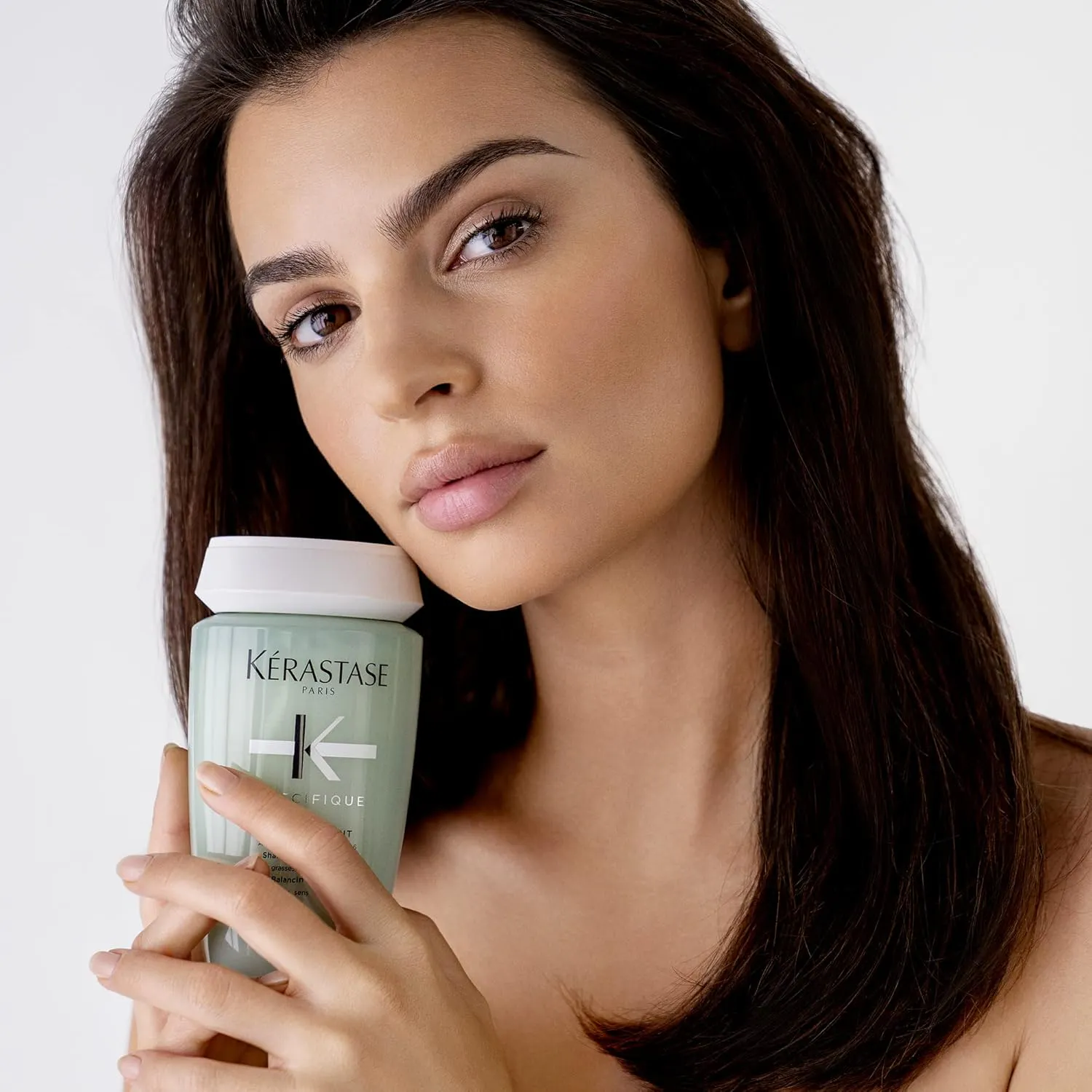
The Kérastase Specifique Shampoo for Oily Scalp is an ultra-light formula that balances scalp oiliness while doing something most oily hair shampoos do not: adding volume. According to Kérastase, it delivers 61% more volume versus unwashed hair, which makes it a standout option for people whose hair not only gets greasy quickly but also goes flat and limp at the roots. The formula contains salicylic acid to gently exfoliate the scalp and remove buildup, along with vitamin B6 (pyridoxine), purifies the scalp to reduce excess oil and odors, and gently nourishes the lengths. It also improves detangling by 20% compared to a non-conditioning shampoo, so the hair feels easier to manage after washing, not just cleaner.
For consistent everyday oiliness
The Hairburst Shampoo for Oily Scalp and Hair is a solid everyday option for people whose main priority is keeping oil under control without needing a highly specialised routine. It cleanses the scalp and removes excess oil effectively, and at 350ml it is a generous size for a shampoo in this category. If you want a reliable, no-fuss formula to use regularly, this is a practical starting point.
For oily roots with dry or damaged ends
The Muk Head muk Oily Scalp Shampoo is specifically designed for the combination scalp pattern where excess sebum is the issue at the roots but the lengths and ends are dry and in need of protection. It works to control sebum production at the scalp while nourishing the rest of the hair, which makes it a better fit for this situation than a straightforward clarifying formula that would leave already-dry ends worse off. If treating your oily roots has always come at the cost of the rest of your hair, this is worth a look.
For a gentle, rebalancing approach
The Alfaparf Milano Semi Di Lino Scalp Rebalance Balancing Low Shampoo takes a different path from a high-foam clarifying formula. As a low shampoo, it cleanses gently and normalises the scalp over time, with a rebalancing effect on scalps with excess sebum. This suits people who want to break the overproduction cycle described earlier, or those who find that strong shampoos leave their scalp feeling irritated and worse, not better. It is a longer-term strategy rather than an instant fix, so give it a few weeks before judging the result.
For the longest-lasting oil control
The L’Oréal Professionnel Scalp Advanced Oiliness Shampoo is the most results-driven option on this list in terms of how long it keeps oil at bay. L’Oréal Professionnel states it delivers 72 hours of oil control after just one use, with 89% less sebum on the scalp (both based on instrumental testing). That is a significant result, and the formulation backs it up: the shampoo is concentrated with 4% AHA and carbonic acid, which work together to gently exfoliate the scalp and absorb excess sebum rather than simply stripping it. An additional benefit is a 30-degree rootlift (also measured by instrumental test), which addresses the flatness that tends to come with an oily scalp. If you are looking for a professional-grade formula that genuinely extends time between washes, this is the one to try.
How Often Should You Wash Oily Hair?
This is one of the most common questions and the honest answer is that it depends on your scalp, but washing every single day is rarely necessary and is often counterproductive for the reasons already covered. Most people with oily hair do best washing every second day using a shampoo formulated for their scalp type.
If you currently wash daily and want to scale back, do it gradually rather than stopping abruptly. Your scalp may produce more oil than usual for a short period as it adjusts, and that is completely normal. Most people find their scalp settles down within a couple of weeks once it stops being over-stripped.
If you need to go longer between washes, applying a dry shampoo to the roots the day before you plan to wash can absorb excess oil and add volume without contributing to the stripping cycle.
Frequently Asked Questions
Does oily hair mean you have an oily scalp?
Yes, almost always. The oil you see on your hair comes from the scalp, not the hair itself. Hair fibre does not produce oil. So if your hair looks and feels greasy, the issue is sebum production at the scalp. Treating the scalp directly, rather than just lathering the lengths, is what produces a lasting result.
Can conditioner make oily hair worse?
It can, if you apply it to the roots. Conditioner is formulated for the mid-lengths and ends of the hair, not the scalp. Applying it all the way up to the roots adds weight and can contribute to the flat, greasy look at the roots. Keep conditioner away from the scalp and you should have no issues using it on the rest of your hair.
Is it possible to have oily hair and damaged hair at the same time?
Completely. The oily roots and dry ends pattern mentioned earlier is very common, particularly in people who colour or use heat styling tools regularly. The sebaceous glands at the scalp are unaffected by chemical or heat damage, so they continue producing oil at the roots while the rest of the hair becomes dry and porous. A shampoo designed for oily scalp that also nourishes the lengths, like the Muk Head muk option above, handles this combination far better than a clarifying formula designed for one problem only.
categories
featured products