Heat Protectant: What It Does, Who Needs It, and Which One to Buy
Most people who use a heat protectant are still damaging their hair - not because the product doesn't work, but because they're applying too little, putting it on wet hair they're about to blow-dry without waiting, or using a formula rated for 180°C when their straightener runs at 230°C. Getting this right isn't complicated once you understand what heat protectant actually does and what to look for on the label.
What Heat Protectant Actually Does
Heat protectant forms a barrier between your hair and the surface of your tool. It doesn't make your hair immune to heat - it slows the rate at which heat penetrates the hair shaft, which reduces the degree of protein damage, moisture loss, and cuticle lifting that causes breakage, frizz, and dullness over time.
The key number to understand is the temperature rating. Every heat protectant is formulated to provide protection up to a certain degree - commonly 220°C or 230°C. If your flat iron runs hotter than that rating, the product offers reduced protection. This is one of the most common mismatches: someone with fine hair turning their tool down to 160°C doesn't need the same formula as someone using a professional straightener at maximum heat.
Coverage matters just as much as temperature rating. A thin, uneven application leaves gaps where the hair is unprotected. Most people use far less than they should. The general guide is to ensure every section of hair is coated before any heat touches it - not just the surface layer.
Who Actually Needs It
If you blow-dry, straighten, curl, or crimp your hair with any regularity, you need a heat protectant. That's true whether you're using professional tools or an entry-level dryer. Even lower heat settings cause cumulative stress to the hair shaft, and the damage compounds over weeks and months.
The people who benefit most are those who use heat daily or near-daily, anyone with colour-treated or chemically processed hair (which is structurally more vulnerable to heat than virgin hair), and anyone who's already dealing with dryness or breakage. If your hair is in good condition and you heat style twice a week, you're still better off protecting it - it's easier to prevent damage than to reverse it.
Spray vs. Cream vs. Serum: Which Format Is Right for You
Heat protectants come in several formats, and the one you choose should suit both your hair type and your styling habit.
Sprays are the most versatile format. They're light, distribute quickly through the hair, and work well for most people who blow-dry or flat iron. They tend to suit fine and medium hair particularly well because they add protection without weight. Most of the products available at Oz Hair and Beauty are sprays for exactly this reason - they work across a wide range of hair types and are easy to apply evenly.
Creams and serums tend to suit coarser, drier, or more damaged hair, where the added moisture and slip of a thicker formula does more than a lightweight spray alone. If your hair drinks up product and still feels dry, a cream-based heat protectant may suit you better.
The key with any format: apply it to damp hair before blow-drying, or to dry hair before using a flat iron or curling wand. Don't apply a heat protectant spray and then immediately put a 230°C straightener over it without letting the product distribute.
How to Apply Heat Protectant Correctly
Step 1: Section your hair. Working in sections ensures even coverage, which is where most people fall short. If you spray once over your whole head and start blow-drying, the bottom layers are essentially unprotected.
Step 2: Apply to each section before heat touches it. Hold the spray about 20-30cm away and spritz evenly, then work the product through with your fingers or a comb before using your tool.
Step 3: Don't skip the ends. The ends are the oldest and most damaged part of the hair shaft - they need the most protection, not the least.
Step 4: Match your product to your tool temperature. If you straighten at 230°C, make sure your heat protectant is rated to at least that temperature. Using a product rated to 220°C on a tool set higher than that isn't giving you full protection.
Which Heat Protectant to Buy
The right heat protectant depends on your hair type, your tools, and what else you're asking the product to do. Here's how the current range stacks up:
For most people - those with normal to fine hair who want reliable protection without weighing anything down - the Redo Haircare Hot Stuff Heat Protect Spray is a strong starting point. It defends against heat up to 230°C, which covers the full range of most professional tools, and it works across all hair types. It's a workhorse formula without unnecessary fuss.
The ELEVEN Australia Heat Styling Protection Spray is another option rated to 220°C (428°F) and is well suited to everyday styling. ELEVEN Australia has built a strong following in Australian salons for formulas that perform without being heavy, making this one a reliable pick for fine to medium hair that you're styling regularly.
If you want a heat protectant that also works against UV damage - relevant if your hair is colour-treated and you spend time outdoors - the Evo Icon Welder Heat Protection Spray is worth considering. It protects against both heat and UV damage while providing style control with a touchable finish, which means it's doing more than a purely protective spray. A practical combination for Australian conditions.
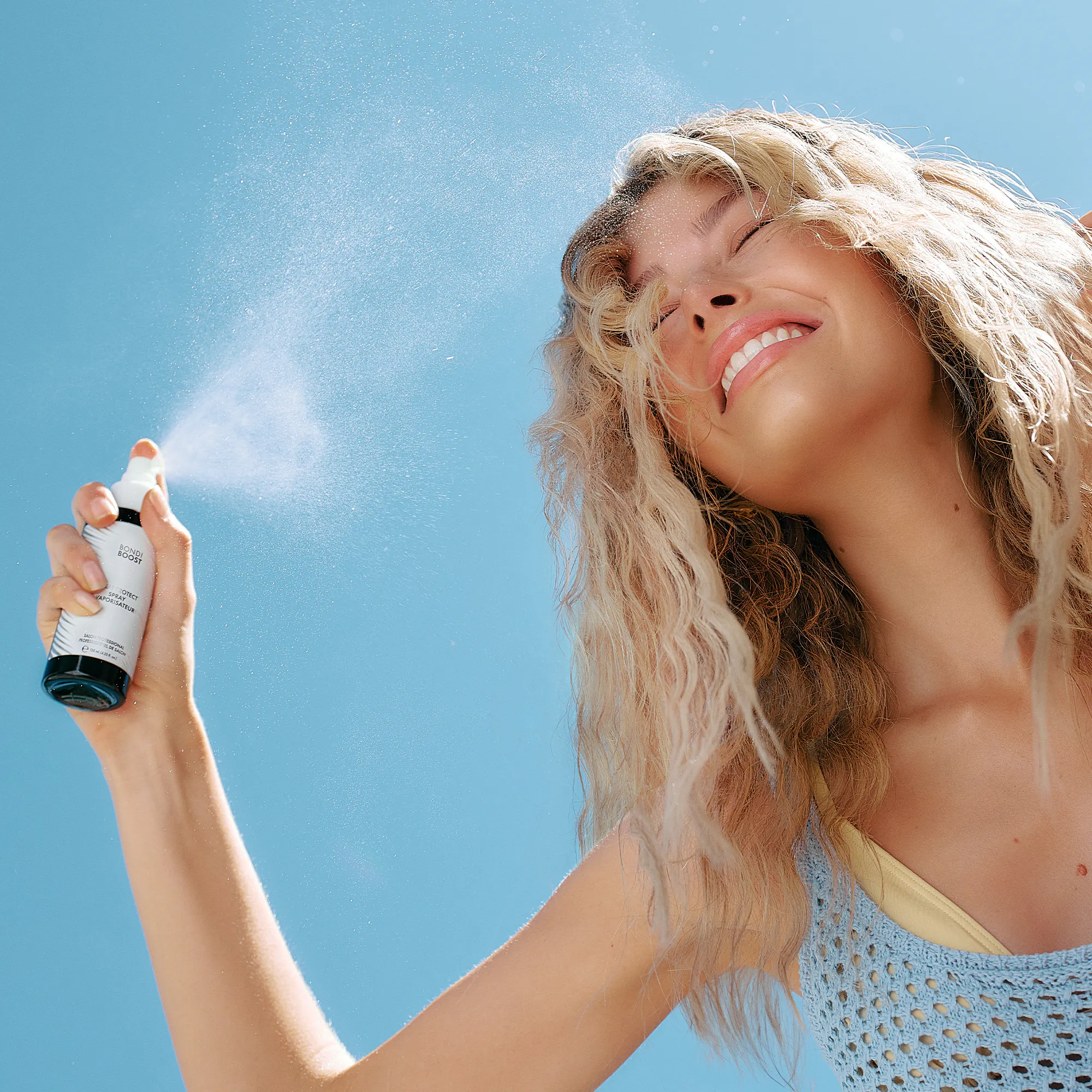
The Bondi Boost Heat Protectant Spray protects against heat up to 230°C and is infused with natural botanicals. It's clinically shown to improve split ends by 86% after a single use - a specific claim that sets it apart from most protectants in this range. The ultra-light mist format won't weigh hair down, making it a particularly good fit for fine hair that still needs repair support.
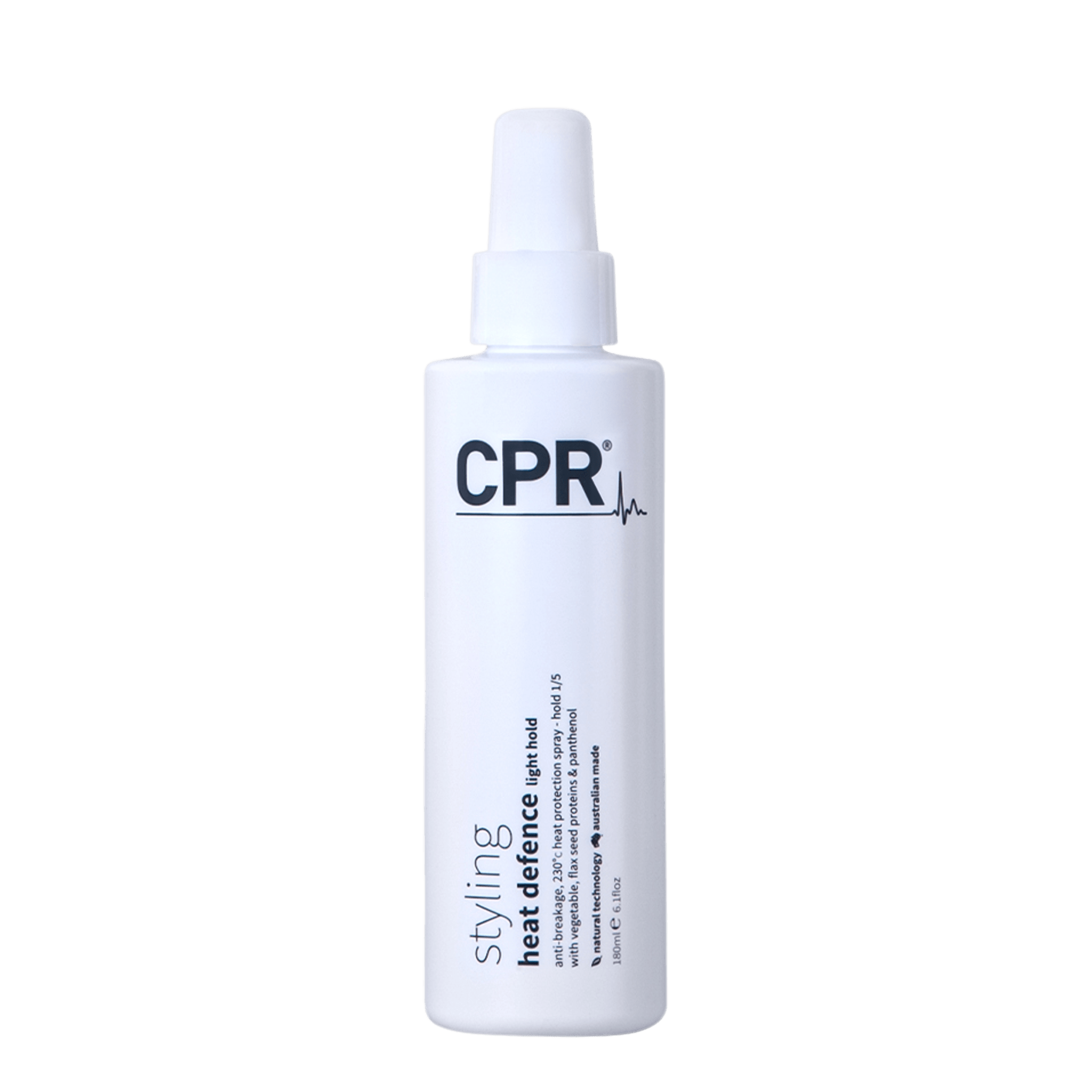
For anyone who wants straight, shiny results or loose frizz-free curls without any added weight, the CPR Hair Heat Defence Thermal Protection Spray is rated to 230°C and delivers a smooth glide during flat ironing or curling that reduces drag on each pass. Less friction through the hair means less mechanical stress alongside the heat. It's humidity resistant and suits all hair types, making it a strong everyday option for people who style regularly.
The Davroe Thermaprotect is applied to wet hair and provides maximum heat protection for all styling tools. It's a lightweight spray containing Quinoa protein and pure plant extracts that leaves hair smooth and shiny while reducing flyaway static - without greasiness or build-up. It suits light texture through to natural hair and is a good option if you want a clean-ingredient formula from an Australian brand.
If you heat style frequently and want a protectant that leaves hair feeling light and natural rather than coated or weighed down, the Alfaparf Milano Semi di Lino Styling Thermal Protector is worth a look. It's rated to 230°C, has no hold, and is designed with a dry, light texture that suits anyone who wants protection without any stiffness or residue. The vegan formula contains Sodium Hyaluronate, Linseed Seed Extract, and Panthenyl-based conditioning ingredients alongside the heat protection. You spray it evenly through the hair before using hot tools - it also works well applied section by section if you prefer a more thorough approach. The 300ml size makes it a practical choice for anyone who styles daily and doesn't want to replace their protectant constantly.
For anyone who blow-dries regularly and wants their styling time to feel easier as well as safer, the milk_shake Lifestyling Thermo-Protector Spray is a lightweight option that defends against thermal damage while also making drying and styling faster. If you spend a lot of time under the dryer and want a product that actively helps the process rather than just sitting on the hair, this is one of the more practical picks in the range.
For dry or already-damaged hair, the Pump Haircare Rich Repair Heat Protection Spray stands out as the most targeted option in this group. Rated to 230°C (450°F), the Rich Repair formula is specifically designed for hair that needs more than just a protective barrier - the added nourishment makes it the pick for hair that's visibly dry, brittle, or prone to breakage from heat use.
Common Questions About Heat Protectant
Can I use heat protectant on dry hair, or does it only work on damp hair?
Both work, but they're used for different things. Applying to damp hair before blow-drying protects against the heat of the dryer as it dries the hair. Applying to dry hair before flat ironing or curling protects against the direct contact heat of the tool. The critical thing is to never skip it either way - the protection mechanism works regardless of whether the hair is wet or dry when you apply it.
How much heat protectant is enough?
More than most people use. A single light spritz over the top of your hair won't coat every strand. Work in sections and make sure the product has contact with the hair throughout, not just on the surface. You shouldn't need to saturate it, but a thorough, even coat is the goal.
Does heat protectant stop working if you apply too much?
Using slightly more than necessary generally won't harm your hair, though very heavy application of some formulas can leave a residue build-up over time. The more common mistake is using too little, not too much.
All products featured here are available at Oz Hair and Beauty with free shipping on orders over $59 and Australia's longest returns policy - 140 days, no questions asked.
categories
featured products