Curly Hair Products: The Complete Australian Guide to Your Curl Type and Routine
You've bought the curl cream that promised definition and delivered crunch. You've bought the conditioner that left your curls flat by lunchtime. Most curly hair products are formulated for climates that aren't Australia, and our conditions are genuinely tougher on curls: humidity swells the hair shaft, UV breaks down hair protein, and depending on your postcode, hard water is coating every strand in mineral buildup before you've reached for a single product. Getting curls that hold up here isn't about finding one hero product - it's about building a routine where each step does a specific job.
Why curly hair behaves differently in Australia
Curly hair is more porous than straight hair by nature, which means it absorbs moisture from the air faster and loses moisture to the air faster too. That's a problem in a country where humidity doesn't stay in one season. Coastal cities including Sydney, Brisbane and Melbourne see humidity spikes year-round, and in winter, indoor heating dries the air and strips moisture straight back out again. Either way, your curl pattern is reacting to the atmosphere, not just to your shampoo.
Water hardness is the second factor most curl routines ignore. Perth and Adelaide have some of the hardest tap water of any Australian capital, loaded with calcium and magnesium that build up on the hair shaft, weigh curls down and interfere with how well a shampoo can lather and rinse clean. Melbourne, Sydney and Hobart sit at the soft end of the scale, so buildup shows up more slowly, but it still shows up, especially if you're using heavier styling creams. If your curls look duller or feel coated no matter how much conditioner you use, hard water is a reasonable place to start looking.
Then there's the sun. Australia has some of the highest UV exposure in the world, and UV radiation breaks down the protein structure in the hair shaft, particularly at the cuticle, which is the layer that gives curls their shape and shine. Sun-damaged curls tend to look dry, feel rougher to the touch and lose definition faster between washes. None of this means curly hair is harder to manage in Australia. It means the products and the order you use them in need to account for what the climate is actually doing to your hair.
Know your curl type before you shop
"Curly hair products" isn't one category. Curl patterns generally sit somewhere between loose waves, defined curls, tight corkscrew curls and coily zigzag patterns, and each type holds moisture, product and style differently. Coily and very curly hair is usually the driest of the group because the hair's natural oils have the furthest to travel down the shaft, so it typically needs richer conditioners and masks. Looser curls can be weighed down by the same products that a coily curl would soak up without a trace.
Most of the products in this guide are labelled for a specific curl range, whether that's curly, very curly or coily, so match the label to your own pattern rather than assuming heavier always means better or lighter always means safer. If you're unsure where you sit, the simplest test is how your hair dries with nothing in it: loose S-bends usually mean wavy to curly, tight springs mean very curly, and a zigzag pattern with little to no visible curl definition usually means coily.
Porosity matters just as much as curl pattern, and it's the part most routines get wrong. Low porosity hair has a tightly packed cuticle that resists moisture, so heavier creams and butters tend to sit on top of the hair rather than absorbing into it, and lighter, water-based formulas usually work better. High porosity hair, which is common if your curls are colour-treated or have any heat or sun damage, has a raised cuticle that lets moisture in quickly but lets it escape just as fast, so it benefits from richer conditioners and a sealing step straight after. A simple way to check where you sit is to drop a clean strand of shed hair into a glass of water: hair that sinks quickly is usually high porosity, hair that floats for a while is usually low porosity, and hair that sits somewhere in between after a couple of minutes is medium porosity.
Building your curl routine step by step
A curl routine is really five jobs done in order: cleanse, condition, deep condition, define, and seal. Skip a step and the ones either side of it have to work harder than they're designed to. Here's how to build it out with products that are actually formulated for curls, matched to what each one does best.
Step 1: Cleanse without stripping your curls
Curly hair doesn't need washing as often as straight hair, but when you do wash it, the goal is to lift buildup, particularly product residue and the mineral deposits that come with harder water, without stripping the scalp of the oils that keep curls soft.
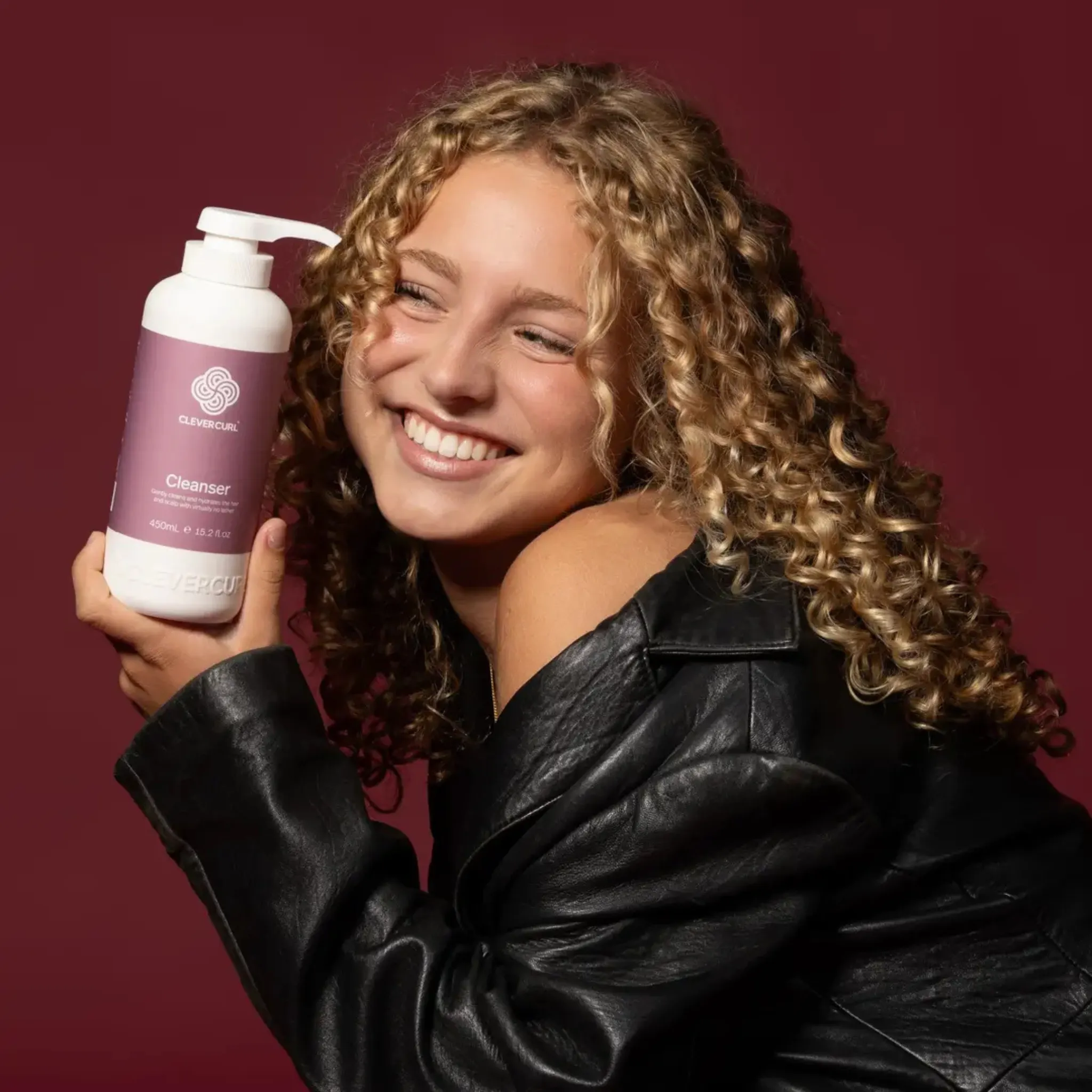
The Clever Curl Cleanser is built around the "no-poo" method: a low-lather, gentle formula designed to be used twice in one wash. The first pass lifts product residue and environmental buildup, and the second actually cleanses the hair and scalp while you massage in with firm pressure at the roots. This double-cleanse approach is worth prioritising if you're in Perth or Adelaide, where harder water means buildup accumulates faster.
If you want a more traditional shampoo texture that still respects the curl, the Kérastase Curl Manifesto Hydrating Shampoo is formulated to cleanse the scalp and remove buildup while preserving the hair's natural oils. It's suited to curly, very curly and coily hair and is designed to define and add radiance to the curl pattern as you cleanse, rather than treating cleansing and curl care as separate steps.
If you're juggling more than one curl concern at once, say frizz, dehydration and uneven porosity along the length of your hair, the Olaplex Nº.4 Curl Bond Shaper Hydrating Curl Shampoo is built to work on a molecular level to strengthen and define coils, curls and waves at any porosity level while cutting frizz and clearing buildup without stripping. It's worth reaching for if you want one shampoo that treats bond strength and hydration together rather than picking between them.
Step 2: Condition for real moisture, not just slip
This is the step most curl routines underinvest in. A good curl conditioner needs to detangle without heaviness, add moisture the hair shaft can actually hold onto, and start the job of fighting frizz before you've left the shower.
The Kérastase Curl Manifesto Hydrating Conditioner is a lightweight, moisture-replenishing formula built for curly and very curly hair. It detangles stubborn knots, adds shine and softness, and is formulated to protect against humidity and increase curl body, bounce and elasticity, which makes it a strong pick if frizz control is your main concern.
The Olaplex Nº.5 Curl Bond Shaper Hydrating Curl Conditioner pairs with the Nº.4 shampoo above and is worth considering if you want the same molecular bond-building benefit in a silicone-free, high-slip formula. It's designed for coils, curls and waves at any porosity level, and its soft, buttery texture is built to hydrate without weighing curls down.
Step 3: Deep condition weekly to rebuild what the climate takes out
Between UV exposure, humidity swings and the mechanical stress of detangling, curly hair loses structural integrity faster than straight hair. A weekly mask is where you put that moisture and elasticity back.
The Kérastase Curl Manifesto Hydrating Mask is formulated for very curly and coily hair that's dry, damaged or brittle. It's built to promote elasticity and bounce, deeply nourish the hair shaft, and protect against humidity-driven frizz, making it the better choice if your curls are genuinely damaged rather than just due for a refresh.
The Matrix A Curl Can Dream Rich Mask is aimed at curls and coils and is formulated without parabens, mineral oils, petrolatum or paraffins. It's infused with Manuka honey extract and focuses on deep hydration while preserving your natural curl pattern, so it's worth reaching for if you want a weekly treatment with a cleaner ingredient list, rather than one targeted specifically at repairing damage.
The Clever Curl Treatment is worth keeping alongside your weekly mask because it does double duty: use it as a deep conditioning treatment before you wash, or as a leave-in on clean, damp hair. It's formulated for all hair types with a particular focus on dry, damaged or colour-treated hair, though it isn't suitable for co-washing, so keep it out of your no-poo routine if you're using the Clever Curl Cleanser.
Step 4: Leave-in conditioner and cream for definition
This is the step that decides whether your curls hold their shape through the day, and it's where most of the "curl cream versus leave-in" confusion comes from. In practice, a good curly hair cream does both jobs: it leaves moisture in the hair after rinse-out conditioner, and it defines the curl before you add any gel on top.
The Kérastase Curl Manifesto Cream (Crème De Jour Fondamentale) is a leave-in formula built with Manuka honey and ceramide, designed to reduce breakage, improve elasticity and define curls without weighing them down. It also carries heat protection to 450°F, which makes it worth using before diffusing or any heat styling, and it's suited to curly, very curly and coily hair that wants both definition and frizz control in one step.
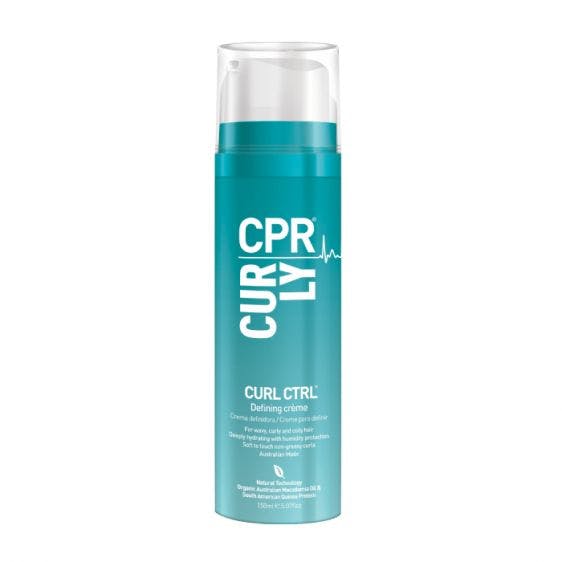
The CPR Hair Curl CTRL Defining Creme is a lighter, botanically led alternative, built around organic Australian macadamia oil and South American quinoa protein for long-lasting definition and separation without a heavy finish. It's suited to wavy, curly and coily hair and is a good pick if you want humidity protection and curl separation with a soft, non-greasy feel rather than a rich, buttery cream.
Step 5: Seal against Australian humidity
Sealing is the step that decides whether your curl definition survives the walk from your bathroom to the outside air, and it's arguably the most important step for anyone living somewhere genuinely humid, think Brisbane summers, coastal New South Wales, or far north Queensland.
The Clever Curl Fragrance Free Humid Weather Gel is built with anti-humectant properties, which means it works to lock moisture into an already hydrated curl rather than drawing more moisture in from the air. It gives a firm cast that holds the curl clump together in humidity, and it's formulated specifically for humid climates, which makes it one of the more targeted humidity-specific products in this routine.
Refresh curls between washes
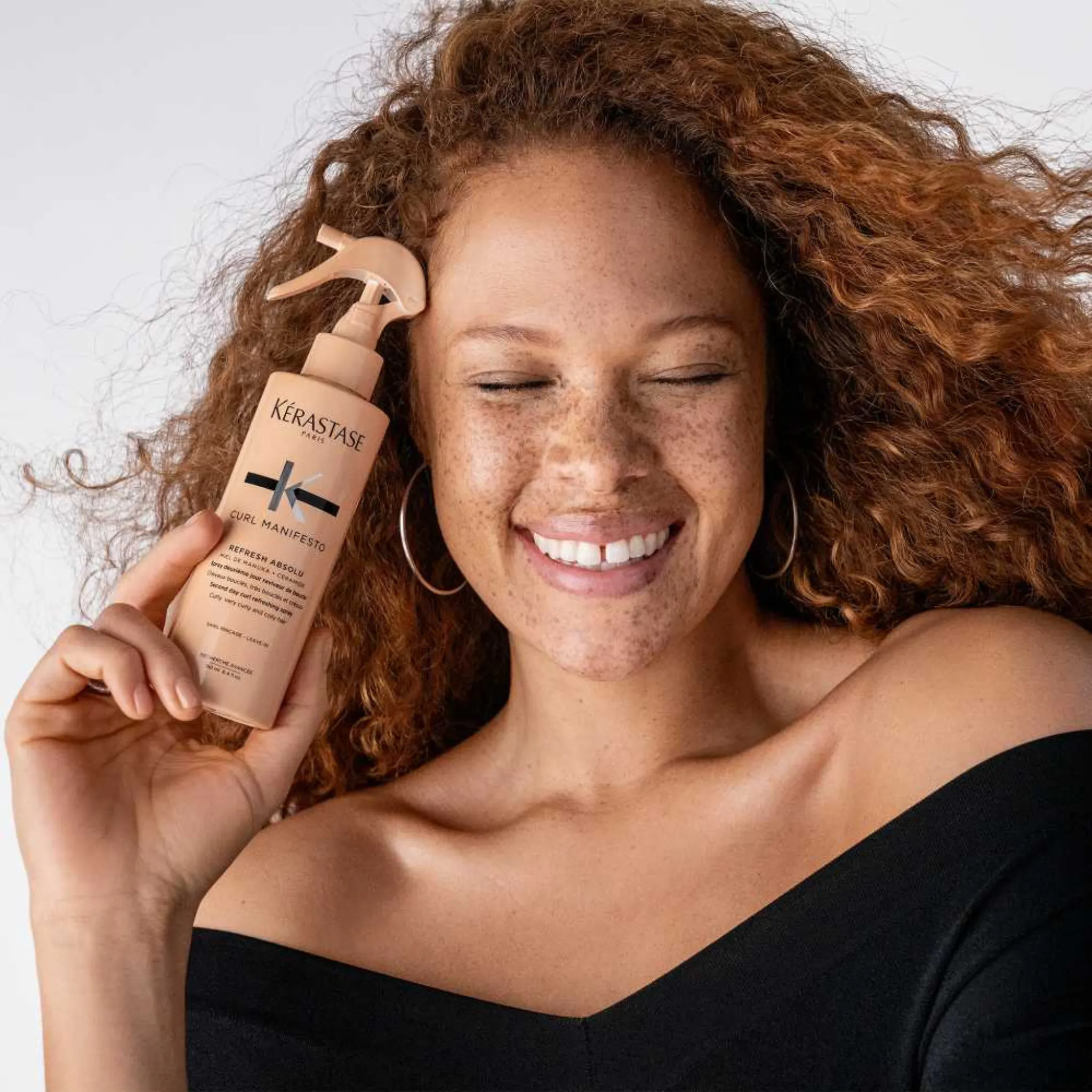
Second and third-day curls tend to lose definition and pick up frizz, but a full rewash isn't always necessary or good for your hair. The Kérastase Curl Manifesto Refreshing Spray (Miracle Curl) is designed for exactly this gap: a lightweight, no-buildup formula that re-hydrates and redefines curls between washes and helps them recover their original pattern. It's suited to curly, very curly and coily hair and is worth keeping in your bag for humid days when curls fall flat by the afternoon.
Want the whole routine in one box?
Assembling five separate products can feel like a lot to commit to before you know what actually works for your curls. The Davroe for you, with love. CURLiCUE Pack bundles a full curl system together in one go, a cleansing clay, a deep conditioning rinse, a curl balm, a curl activator and a large claw clip, so you can move through cleanse, condition, define and style without buying each step separately. It's a sensible starting point if you're new to structured curl care and want to trial a complete routine before building your own combination from the products above.
Choosing the right curly hair brush
Brushing curly hair the way you'd brush straight hair breaks up curl clumps and creates frizz, so the tool matters as much as the products. The general rule is to detangle in the shower, on wet hair, with conditioner still in it, working from the ends up towards the roots to avoid forcing knots further in. Once curls are dry and styled, brushing them out again undoes the definition you've just built, so it's best avoided between washes.
The Oz Essentials Curl Lovers Defining Brush is built for exactly this job. It's designed to detangle, define and enhance your natural curl pattern while reducing frizz and breakage, with side ridges built in for separating curls while they're still wet and a pointed tail end for parting and precision styling. It's suited to curly, wavy and coily hair, and it's a good option whether you're new to a curl routine or you've been at it for years, since the lightweight design doesn't fight against whatever cream or gel you've already put in.
It's also worth pairing the right tool with the right drying method. Plopping, which means wrapping freshly conditioned curls up in a microfibre towel or an old cotton t-shirt for ten to fifteen minutes after your last rinse, absorbs excess water without the friction of regular towelling, which is what usually causes frizz in the first place. It's a small step, but on humid days it makes a noticeable difference to how well your curl clumps hold together once you add cream or gel on top.
Common questions about curly hair products in Australia
Do I need different products for a humid Brisbane summer versus a dry Melbourne winter?
Not necessarily different products, but a different balance of them. In humidity, lean harder on an anti-humectant sealant like the Clever Curl Humid Weather Gel to stop curls absorbing excess moisture from the air. In dry winter conditions, when indoor heating strips moisture out of the air, prioritise the conditioning and leave-in steps, since your curls are more likely to be under-hydrated than over-exposed to humidity.
Can hard water actually affect my curls, or is that overstated?
It's a real factor, particularly in Perth and Adelaide, which have Australia's hardest tap water. Calcium and magnesium in hard water can coat the hair shaft, making curls feel dull, rough or weighed down over time, and it can also reduce how effectively shampoo lathers and rinses out. A thorough cleanse, such as the double-cleanse method used by the Clever Curl Cleanser, helps manage this even without installing a water filter.
How often should curly hair actually be washed?
There's no single answer that works for every curl type, since it depends on your scalp, your climate and how much product you're using, but most curly hair benefits from washing less frequently than straight hair, since over-washing strips the natural oils curls rely on for definition. Using a refreshing spray between washes, like the Kérastase Miracle Curl spray, is one way to extend the gap without your curls looking tired.
What's the difference between a leave-in conditioner and a curl cream?
In practice, the line has blurred, and most of the products in this guide do both jobs at once. A leave-in conditioner is designed to stay in the hair after you rinse out your regular conditioner, adding extra moisture that isn't washed away, while a curl cream is designed to shape and define the curl on top of that moisture. Formulas like the Kérastase Curl Manifesto Cream are built to work as both, adding moisture and definition in a single step, which is the simpler approach for most people unless your curls need more moisture than one product can realistically supply.
categories
featured products