Boar Bristle Brush: What It Actually Does and Whether Your Hair Needs One
If your hair looks dull, frizzy, or flat no matter what products you use, the problem might not be your shampoo or your styling routine at all. It might be the brush. A boar bristle brush works on a completely different principle to the plastic or nylon brush sitting in most bathroom drawers, and understanding that difference is the fastest way to work out if it's actually the fix you need.
What Makes a Boar Bristle Brush Different From a Regular Brush
A regular brush, whether it's plastic-bristled or a basic paddle brush, is built to do one job: pull the brush through your hair and separate the strands. It detangles. That's about where its job ends.
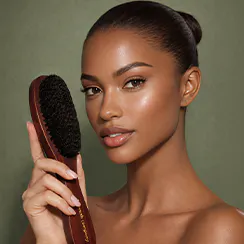
A boar bristle brush is built to do something a standard brush physically can't. Boar bristles are made from keratin, the same protein your hair is made of, and they're fine and slightly textured along their length. That texture lets them pick up the natural oil (sebum) sitting at your scalp and carry it down the length of each strand as you brush. This is called sebum distribution, and it's the whole reason boar bristle brushes exist.
Your scalp produces oil to condition your hair, but on its own that oil mostly stays near the roots. If you have oily roots and dry, frizzy ends, that's often not two separate problems, it's one problem: the oil isn't getting to where it's needed. A boar bristle brush moves it there.
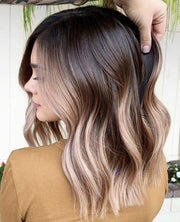
The second thing boar bristles do is smooth the hair cuticle, the outer layer of each strand that looks like overlapping scales under a microscope. When that layer lies flat, hair reflects light evenly and looks shiny. When it's rough or lifted, hair looks dull and feels frizzy even if it's not damaged. Brushing with boar bristles has a mild smoothing effect on the cuticle, similar to running your hand down a rough surface until it flattens out.
Nylon and plastic bristles can't do either of these things properly. They're often too coarse and spaced too widely to reach the scalp oil, and they don't have the fine surface texture that smooths the cuticle. They're built for detangling and volume, not for conditioning the hair as you go.
What a Boar Bristle Brush Actually Does for Your Hair
Put simply, a boar bristle brush adds shine, reduces frizz, and gives your hair a more naturally conditioned look and feel over time, without a product doing the work. Because it's spreading your own natural oils rather than adding anything, the result tends to look and feel more like healthy hair and less like a coated, product-heavy finish.
It's worth being honest about what it doesn't do. A boar bristle brush isn't primarily a detangling tool for very thick, curly, or coily hair, and used on its own on tightly coiled hair it can struggle to get through knots without snagging. If that's your hair type, a wide-tooth comb or a detangling brush first, followed by a boar bristle brush to finish and add shine, generally works better than boar bristles alone. It also won't fix damage from heat styling or colour treatments. It works with the hair and oil you already have, it doesn't repair what's already compromised.
Who Actually Needs One (and Who Doesn't)
The people who see the most obvious difference from a boar bristle brush are those with fine to medium hair that gets oily at the roots quickly but feels dry or frizzy at the ends. That combination is exactly what sebum distribution is designed to fix, and it's why several of the boar bristle brushes on our site are specifically described as suited to fine to medium hair.
If you have thick, long, or wavy to curly hair, boar bristle brushes still work, but the story changes slightly. You'll usually get better results from a brush that combines boar bristles with a firmer core (a paddle brush, for instance), which gives you enough strength to move through length and weight while still getting the shine and frizz benefits.
If your hair is very fine and prone to flatness at the roots, brushing too vigorously with any brush, including boar bristle, can push oil further up the hair shaft than you want and leave roots looking greasy sooner. In that case, gentler, shorter brushing sessions work better than a long daily routine.
How to Choose the Right Boar Bristle Brush for Your Hair
Boar bristle brushes aren't one size fits all, and the shape of the brush, and what's blended with the bristle, matters almost as much as the bristle itself.
Fine to medium hair that leans dry or frizzy at the ends. The Oz Essentials Boar Bristle Oval Detangler Brush is worth a closer look. Its oval cushion shape is designed to detangle without pulling or breaking the hair, and it's shower friendly, which makes it a good fit if you want to brush through conditioner as part of your wash routine. It's also a solid pick if you're regularly building up-do styles, since the smoothing effect helps control flyaways before you pin hair up.
Any hair type that just wants an easy, one-step detangle and smooth. The Brush Company The Glide is designed to detangle and smooth hair in the same stroke, with an ergonomic handle built for comfortable everyday use. It's one of our best-selling boar bristle brushes, and it also comes in a mini size, so you can keep a travel or handbag version alongside the full-size brush.

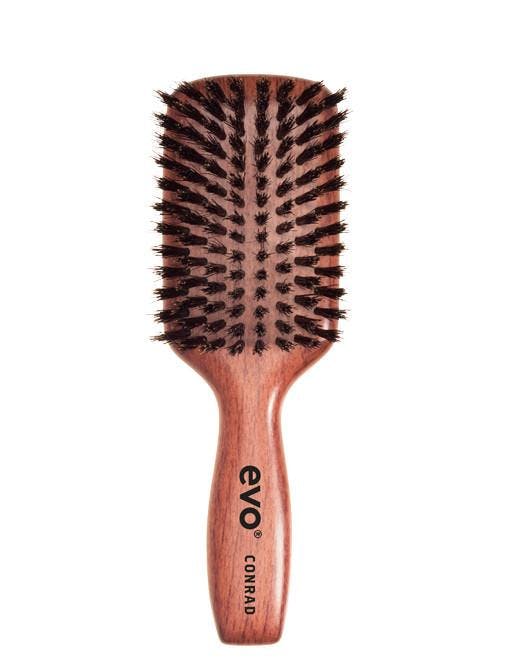
Long, thick, wavy, or curly hair. The Evo Conrad Natural Bristle Paddle Brush is built with that hair type in mind. Its paddle shape and firmer base give it the strength to move through thicker, heavier hair, while its natural boar bristles polish the cuticle to smooth hair and add shine, and reduce frizz to improve manageability. It's also made with FSC certified wood from well-managed forests, which is worth knowing if sustainability factors into what you buy.
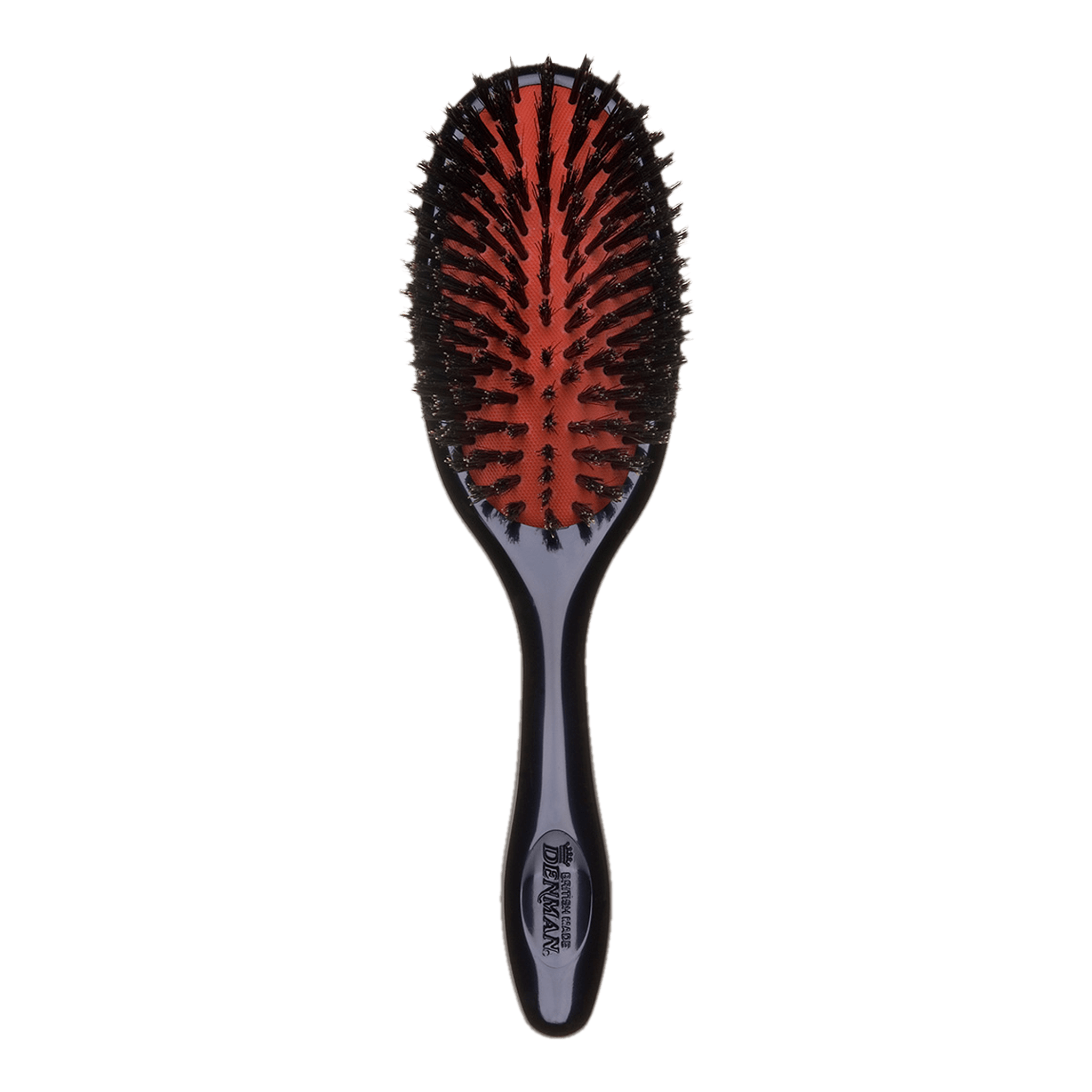
Anyone who wants one brush for daily smoothing and styling, including up-dos. The Denman D82M Medium Cushion Natural Bristle Brush is a good all-rounder. Its 100% boar bristle distributes oil well, and the lightweight, balanced handle gives you more control when you're brushing out curls or building up-do styles, which is where grip matters more than it does for a simple morning brush-through.
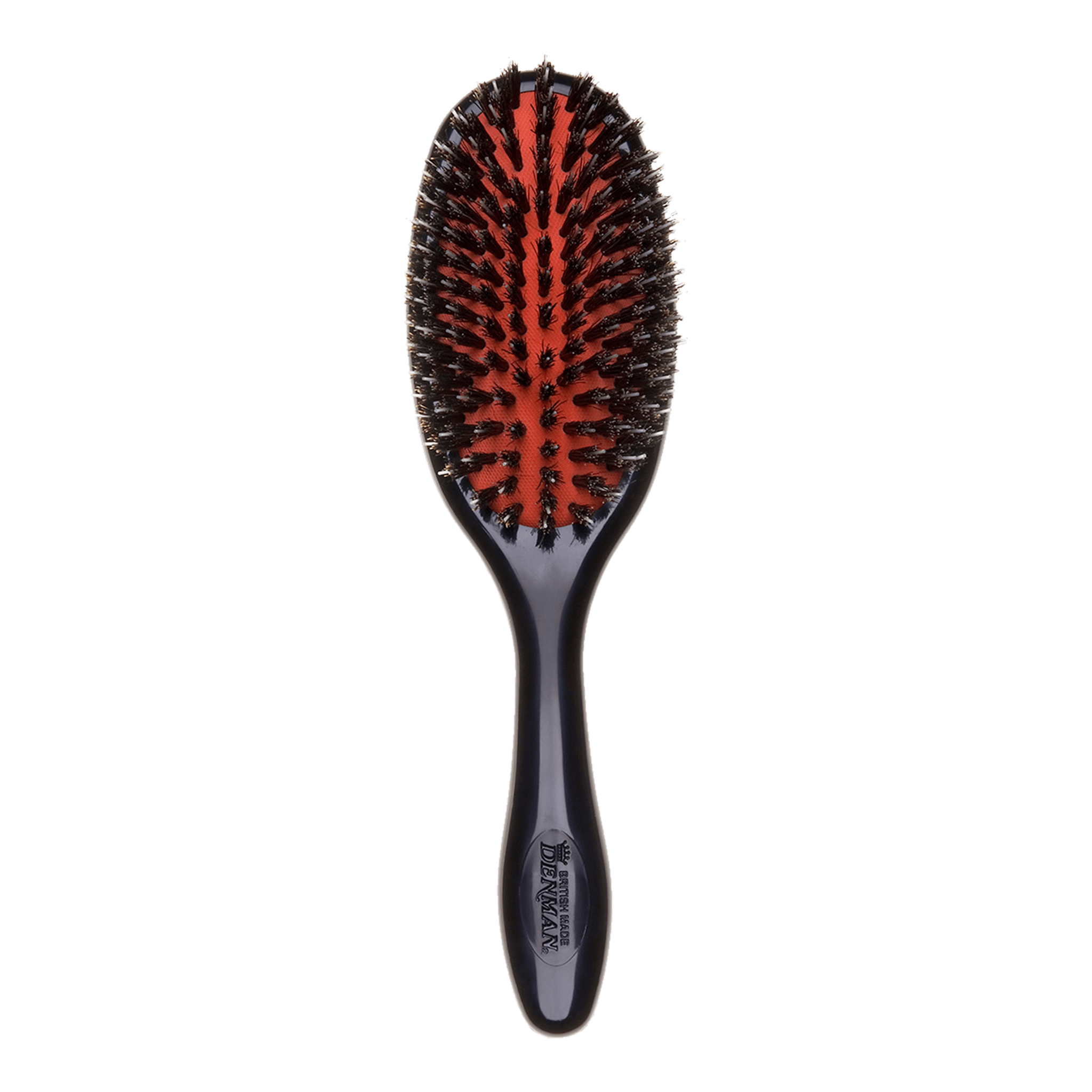
Similar hair needs to the D82M, but you want a little more help getting through knots. The Denman D81M Medium Cushion Natural Bristle Single Nylon Quill Brush uses the same natural bristle cushion as the D82M, with a single nylon quill running through the centre, what Denman calls the "porcupine effect". It still distributes natural oils through the hair for shine and condition, but the extra quill gives the brush a bit more grip and control as it moves through your hair, which is handy if you find a pure boar bristle brush skates over knots rather than working through them.
A sleek, polished, slicked-back finish rather than everyday detangling. The Brush Company The Polisher is a wooden brush built specifically for smoothing hair flat and taming flyaways into a clean, controlled finish, which makes it better suited to styling moments than daily brushing. It's another of our best-selling boar bristle brushes, and like the Glide, it's available in a mini size for touch-ups on the go.
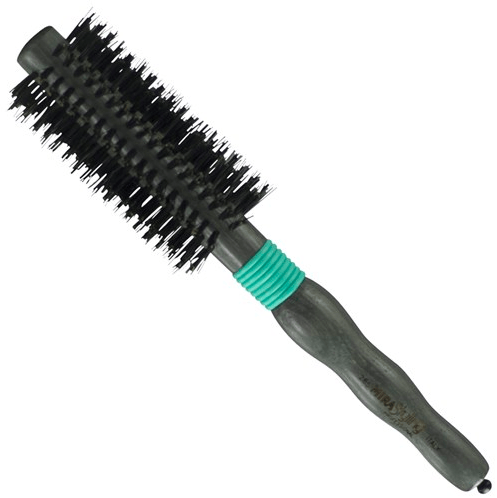
Volume and shape while blow-drying, rather than a finishing brush. The Mira 285 Reinforced Boar Bristle Radial Brush is a different category of tool. It's a round brush with a 45mm barrel, made in Italy, and its bristles combine boar with nylon for extra strength, which is designed to hold up to the wear and tear of regular styling better than pure boar bristle alone. It's suited to short to medium length hair and all hair textures, and works best as a styling brush for smoothing, volume, and shine, so think of it as a companion to a paddle or cushion boar bristle brush rather than a replacement.
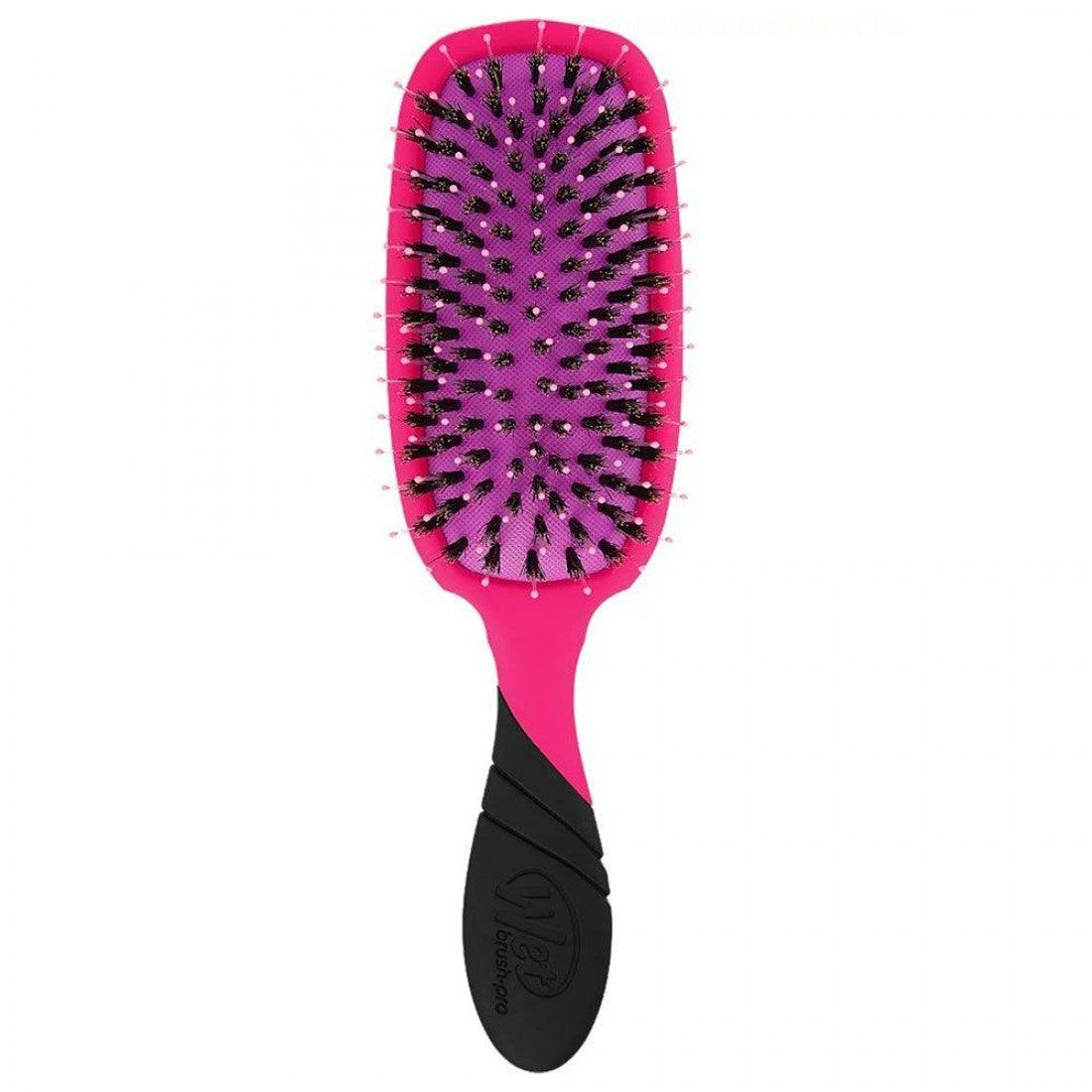
Finishing styles like ponytails and updos, or blending dry shampoo evenly. The WetBrush Pro Shine Enhancer Boar Bristle pairs boar bristles with WetBrush's softer IntelliFlex bristles, so it adds the shine and oil distribution boar bristles are known for while still detangling gently. It's suited to any hair type, and its rubberised, secure-grip handle makes it a genuinely useful option for smoothing hair after a shower or blending through flyaways once you've applied dry shampoo.
How to Use a Boar Bristle Brush Properly
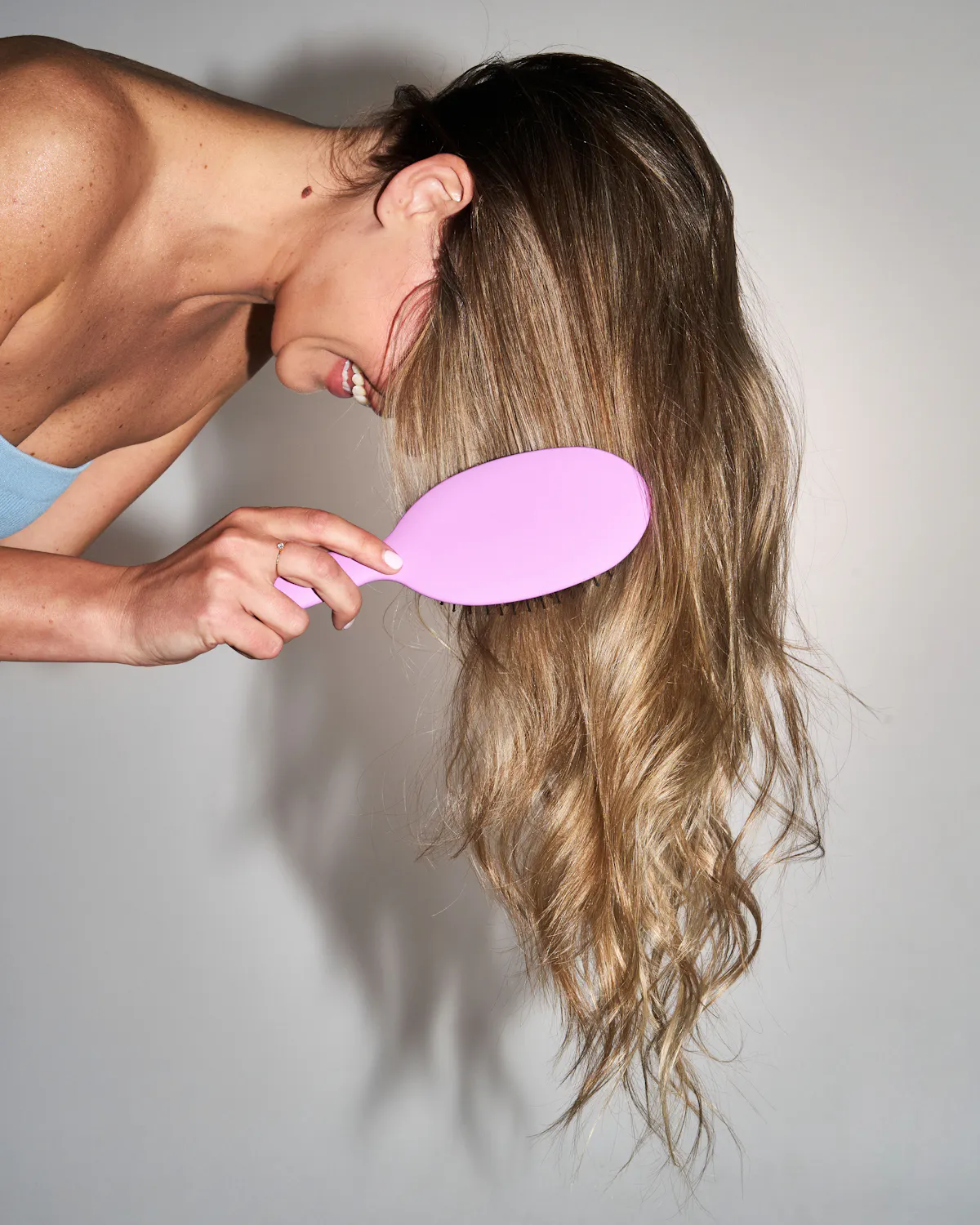
Most of the benefit comes from brushing before you wash your hair, not after. Brushing dry hair before a shower helps move oil and any product build-up down the hair shaft, which means it doesn't just sit at the roots and get washed straight out. Start at the scalp with your head tipped forward, and use long, full-length strokes so the brush is genuinely reaching the roots and carrying through to the ends, rather than only skimming the surface.
On very tangled hair, work through knots gently with your fingers or a wide-tooth comb first. Boar bristles are designed to smooth and finish, not force through resistance, and pulling a boar bristle brush through a serious tangle is more likely to break bristles or hair than sort the knot out.
Boar bristle brushes need cleaning more often than plastic ones, since they're collecting scalp oil and product residue by design. Removing hair from the bristles every few days and giving the brush a proper wash weekly keeps it doing its job instead of redistributing old build-up back into clean hair.
Common Questions
Can I use a boar bristle brush on wet hair?
Generally, no. Hair is more fragile and stretches more when wet, and boar bristles aren't designed to handle that kind of tension, so brushing wet hair with one increases the risk of breakage. Boar bristle brushes are best used on dry hair, ideally before you wash it. If you need to detangle wet hair, a wide-tooth comb or a brush specifically designed for wet hair is the safer choice.
Do boar bristle brushes work on curly hair?
They can, but they work best as a finishing step rather than the primary detangling tool. Curly and coily hair tends to tangle more and needs a comb or detangling brush to work through knots first. A boar bristle brush afterwards, or one with a firmer paddle base like the Evo Conrad, helps smooth the cuticle and add shine without disturbing curl pattern too much, but it's not going to be the brush that gets you through significant knots on its own.
How often should I replace or clean a boar bristle brush?
Clean it weekly, more often if you use a lot of styling product. As for replacement, boar bristles don't wear out on a fixed schedule the way some tools do, but if you notice bristles thinning, snapping, or the brush no longer gliding smoothly, that's the sign it's time for a new one.
categories
featured products